




Georgia's Unique Homicide Laws
Georgia doesn't use first-degree, second-degree, or third-degree murder classifications like other states. Instead, the state’s homicide structure creates distinct categories based on intent and circumstances, with each offense carrying devastating penalties that could end your freedom forever.
Understanding these distinctions is critical because the difference between murder and manslaughter can mean the difference between life in prison and eventual release. Prosecutors routinely overcharge homicide cases, using fear to force unfavorable plea bargains before defendants understand their options.
Malice Murder
Malice murder, the most serious homicide charge in Georgia, carries a minimum sentence of life imprisonment with the possibility of the death penalty. A conviction requires proof of malice aforethought, either express or implied.
Express malice exists when the accused deliberately intended to kill another person. Implied malice exists when one commits acts so reckless and wanton that they show “an abandoned and malignant heart”, even without the specific intent to kill.
Penalties:
- Life in prison without parole
- Life with the possibility of parole after 30 years
- Death penalty in aggravated cases
Felony Murder
Georgia's felony murder rule creates liability when someone dies during the commission of certain felonies, even if the accused never intended anyone to die. The statute has resulted in life sentences for defendants who never touched a weapon or harmed anyone directly.
Common felony murder scenarios:
- Someone is killed during an armed robbery, burglary, or kidnapping.
- A co-defendant kills someone during a felony you participated in.
- A victim dies from a heart attack during a home invasion.
- A bystander is accidentally shot during your arrest.
If we can disprove the underlying felony, the associated murder charge will collapse entirely.
Second-Degree Murder
Reserved for cruelty-to-children cases where a child under 14 dies from criminal neglect or abuse. While less common than other murder charges, second-degree murder still carries a sentence of 10–30 years in prison.
Manslaughter Charges and Opportunities for Reduction

Voluntary Manslaughter
Voluntary manslaughter occurs when the perpetrator kills someone in the "heat of passion" after sufficient provocation. This charge recognizes that reasonable people can lose control under extreme circumstances, reducing the more serious murder charge to manslaughter.
Key legal elements:
- Adequate provocation that would enrage a reasonable person
- No "cooling off" period between provocation and killing
- Actual heat of passion at the time of killing
Example:Discovering your spouse in bed with another person and killing one or both individuals in a blind rage.
Penalties:One to 20 years in prison.
Involuntary Manslaughter
Georgia law recognizes two types of involuntary manslaughter.
With misdemeanor involuntary manslaughter, the perpetrator causes a death during the commission of a misdemeanor or a lawful act done in an unlawful manner. The penalty for this offense is up to 12 months in jail.
With felony involuntary manslaughter, the perpetrator causes a death during the commission of an unlawful act not covered by the state’s felony murder rule. This crime is punishable by one to 10 years in prison.
Common scenarios:
- A fatal car accident arising from reckless driving
- A death resulting from an overdose of drugs you provided
- A construction accident caused by negligent safety violations
Vehicular Homicide
In Georgia, first-degree vehicular homicide refers to killing someone while driving under the influence or fleeing police. The penalty for this offense is up to 15 years in prison.
Second-degree vehicular homicide occurs when someone is killed due to reckless or aggressive driving. This offense comes with a possible punishment of up to 12 months in jail, along with fines and other consequences.
Consequences of Homicide Charges Beyond Prison
Prison time is only the beginning of the potential consequences of being charged with homicide. A conviction could destroy every aspect of your life. Here’s how:
- Employment opportunities disappear:Those convicted of felony murder can permanently lose the possibility of gainful employment.
- Families fracture:Decades in prison can tear apart marriages and separate parents from their children.
- Communities turn away:A strong, enduring public stigma tends to follow homicide convicts.
- Civil lawsuits could follow:Victims’ families can pursue wrongful death claims worth millions.
- Appeals can consume years:The stress of the legal process can prolong the trauma for families on both sides.
Media Attention and Public Opinion
Homicide cases generate intense media coverage that can poison potential jury pools before a trial ever begins. Moreover, social media can amplify public outrage, creating a presumption of guilt that follows you regardless of the eventual verdict.
We understand how to handle media perceptions and will work to protect your reputation while building your defense. Public relations strategy is a key part of legal strategy in high-profile homicide cases.
Death Penalty Considerations
The state actively pursues capital punishment in aggravated murder cases. Key factors in seeking the death penalty include:
- Multiple victims or prior murder convictions
- Killing during armed robbery, burglary, or kidnapping
- Murdering police officers, judges, or prosecutors
- Torture or cruelty prior to death
- Killing witnesses to prevent testimony
Death penalty cases require the management of skilled attorneys with ample experience and resources.
How We Defend Against Homicide Charges in Hall County

Our knowledgeable attorneys might make use of several legal provisions and strategies while crafting your case, including the following:
Georgia's “Stand Your Ground” Law
Georgia's self-defense laws provide powerful protection for justified killings. Unlike many states, Georgia has no duty to retreat, meaning you can use deadly force when reasonably necessary to prevent death or great bodily harm to yourself or others.
Necessary elements of self-defense:
- Imminent threat of death or great bodily harm to yourself, family members, friends, or even strangers
- Reasonable belief that deadly force was necessary
- No duty to retreat from the attack
- No role in provoking the encounter
It’s important to note that the state must disprove self-defense beyond a reasonable doubt. Successful self-defense claims can provide complete immunity from prosecution.
Challenging Malice and Intent
Proving malice aforethought is the prosecution's biggest burden in murder cases. Without this element, murder charges must be reduced to voluntary or involuntary manslaughter, turning life sentences into more manageable terms of incarceration.
Challenges to proving intent:
- Heat-of-passion defenses that negate premeditation
- Mental illness or diminished capacity affecting intent
- Accident or mistake defenses showing a lack of criminal purpose
- Evidence of intoxication, which can undermine claims of intent
Thanks to Blake's prosecutorial experience, he knows exactly how the state attempts to prove malice, including the evidence prosecutors need, how they evaluate witness credibility, and where cases typically break down. This knowledge creates distinct legal advantages that other attorneys can't provide.
Constitutional Violations and Evidence Suppression
When police exceed their authority during homicide investigations, it can provide powerful defensive tools.
Common Fourth Amendment violations:
- Warrantless searches of homes, vehicles, or persons
- Coerced confessions obtained through psychological pressure
- Miranda violations during custodial interrogations
- Warrantless arrests based on insufficient probable cause
- Unlawful surveillance using GPS tracking or phone monitoring
Matt's judicial experience lends him rare insight into how judges evaluate motions for suppression and make evidentiary rulings. He understands the arguments that persuade judges and the constitutional violations that call for the exclusion of evidence.
When violations occur, we file comprehensive motions for suppression to exclude tainted evidence. Successful motions often derail prosecutorial efforts entirely, forcing dismissals or favorable plea negotiations.
Mistaken Identity and False Accusations
Eyewitness identification remains notoriously unreliable, especially in violent encounters where witnesses experience extreme stress and fear. Studies show that cross-racial IDing, after-dark encounters, and a focus on weapons dramatically increase rates of misidentification.
Notable identity-related challenges:
- Witness reliability:Memory gaps, inconsistent descriptions, confidence inflation.
- Suggestive procedures:Leading photo arrays, inappropriate lineups.
- Alternative suspects:Investigating other individuals with motive, means, and opportunity.
- Alibi evidence:Documentation of the defendant’s whereabouts during the homicide.
- Digital evidence:Cell phone records, GPS data, surveillance footage.
Disproving Felony Murder
While an intimidating charge, felony murder has one unique vulnerability: If the defense can disprove the underlying felony, the murder charge fails. This provides strategic opportunities that are unavailable in malice murder cases.
Common felony murder defenses:
- Abandonment of effort:Ceasing involvement in the crime before the death occurred.
- Lack of causal connection:Deaths unrelated to the commission of the felony.
- Misdemeanor assault:Reducing predicate felonies to the misdemeanor level.
- Self-defense during felony:Justified force that negates criminal liability.
Our team has extensive experience handling felony murder cases. We know how prosecutors formulate their arguments and where defenses typically succeed.
Bond Hearings and Pretrial Release

Georgia law prohibits bail (outside judicial discretion) for certain murder charges. However, many murder defendants qualify for bond through superior court hearings, where evidence is tested and defenses are presented.
Factors for granting bond:
- Strength of prosecutorial evidence
- Flight risk and community ties
- Danger to community or witnesses
- Prior criminal history
- Family support and employment status
Strategic bond hearing preparation could determine whether you await trial at home with your family or spend years in jail before the resolution of your case. Hiring a qualified attorney early on will greatly improve your prospects.
Timeline expectations:
- Arrest to first appearance:Within 72 hours.
- Superior court bond hearing:Two to four weeks after arrest.
- Indictment:Two to six months, depending on case complexity.
- Trial:12–24 months for most murder cases.
Hall County Homicide Prosecution Patterns

The Northeastern Judicial Circuit Approach
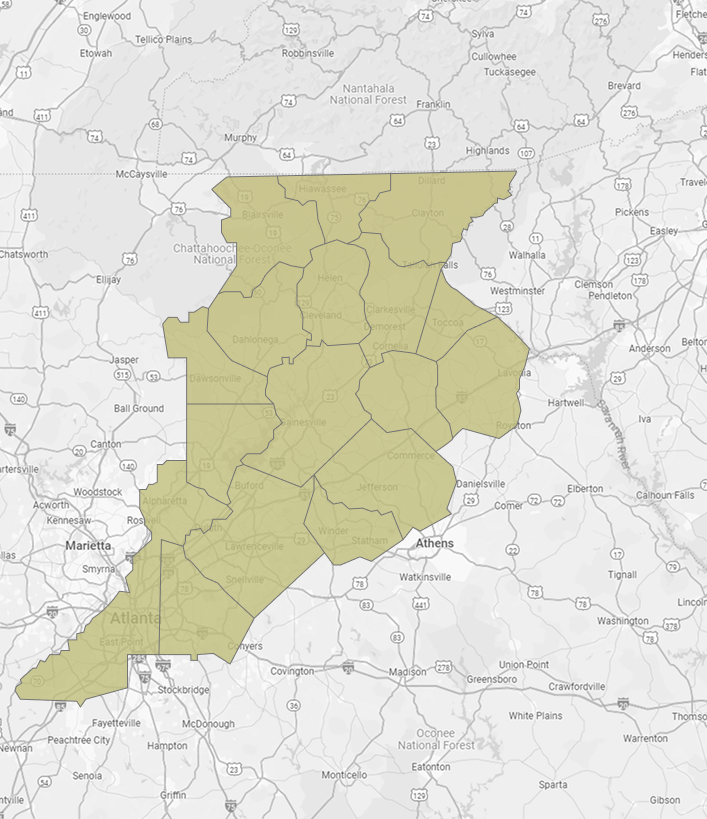
The Northeastern Judicial Circuit District Attorney's Office, which serves Hall and Dawson counties, handles homicide prosecutions with specific priorities and patterns:
Prosecutorial emphasis:
- Domestic violence homicides typically receive maximum sentences.
- Gang-related killings may face enhanced charges.
- Cases with child victims can prompt the aggressive pursuit of capital punishment.
- Repeat violent offenders rarely receive plea offers.
Negotiation factors:
- Self-defense claims receive serious consideration with strong evidence.
- Mental health concerns can influence charging decisions.
- Cooperation with investigations sometimes results in a reduction of charges.
- Input from the victim’s family can affect plea negotiations.
Local Court Dynamics
Hall County Superior Court handles felony homicide cases, with judges who have extensive experience with capital litigation. Our understanding of the judicial perspectives, preferences, and tendencies that characterize this court lends us a valuable strategic edge.
Blake and Matt's local relationships, built through years of service as a prosecutor and a judge, create key advantages in negotiations and court proceedings. We know how local judges evaluate evidence, make rulings, and approach sentencing.
Murder Charges Could Mean Life in Prison — Get the Defense You Need
Former prosecutor Blake A. Poole and former judge Matt Leipold combine decades of insider experience with personalized attention to defend Hall County clients in homicide cases. We know how murder cases are prosecuted and decided because we've been on both sides.





.avif)