
January 13, 2026
By Blake A.Pool
Free Consultations
|
24/7 for Emergency Help

January 15, 2026
By Blake A. Poole
When a Georgia judge signs a protective order against you, your life changes instantly. Maybe it started with a family violence allegation, an argument at home, or a messy breakup. Whatever the path, once that order is in place, the court expects strict compliance. Violating a protection order is not just “breaking a rule” — it is a crime that can lead to arrest, fines, jail time, and even felony charges in severe cases.
Many people violate these orders without fully understanding them. They respond to a text message, drive past a residence, or send a quick apology on social media and think it doesn’t count. Under Georgia law, those small decisions can have enormous consequences, and our experienced criminal defense lawyers have prepared this article to explain them.

A protective order (sometimes called a restraining order) is a court order designed to protect a person from family violence, stalking, or harassment. In a family violence protective order, the parties are usually spouses, former spouses, parents and children, people who live or lived together, or parents of the same child.
The order can do a lot more than just say “don’t call this person”. It may:
Many people are surprised by how broad these rules are. Under criminal law, “contact” is not just showing up at someone’s door. A friendly birthday message or a “just checking on you” text can still be treated as a violation of the order if the judge has prohibited all communication.
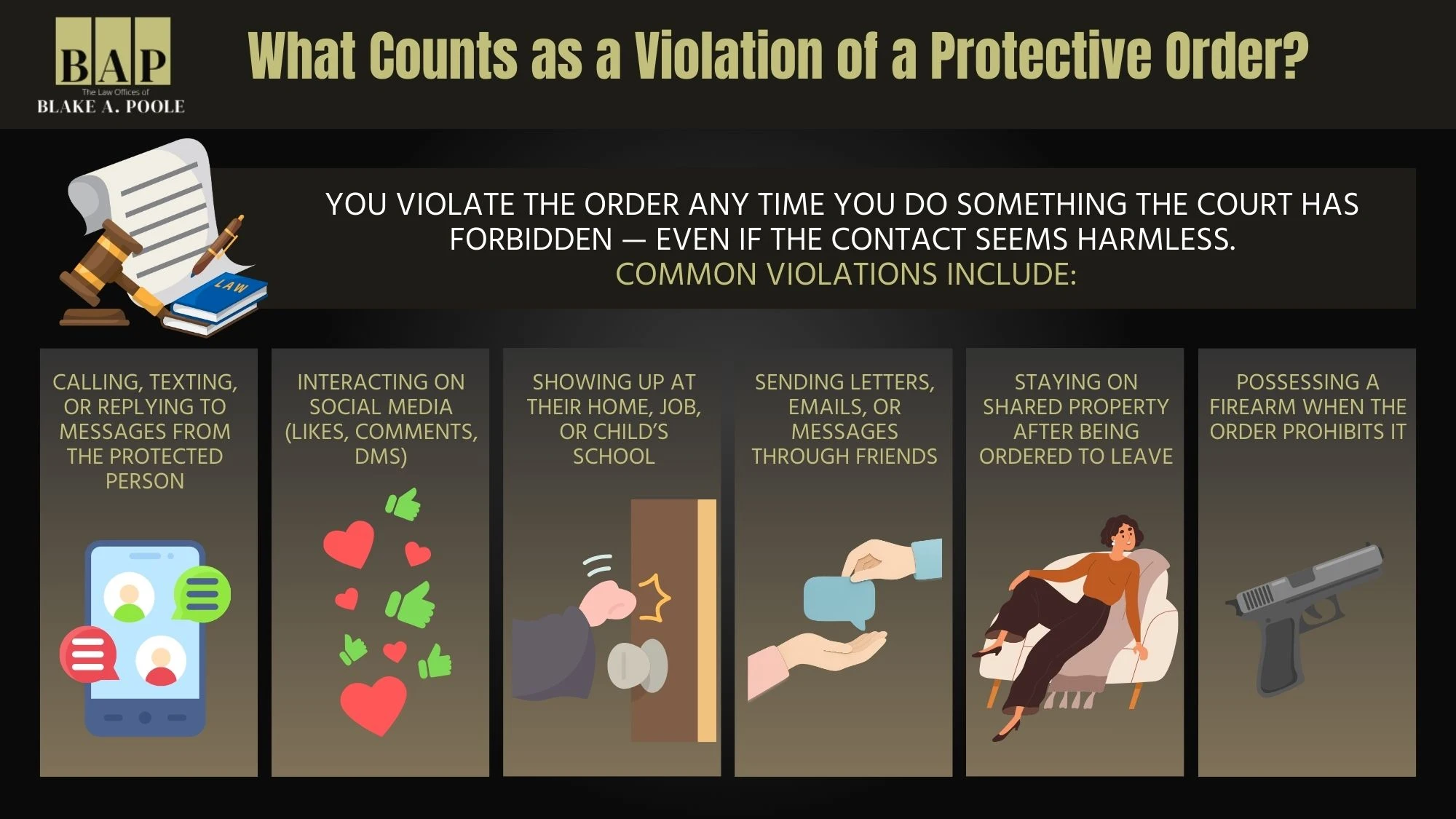
A violation happens any time you knowingly do something the order says you may not do. That can include obvious conduct, such as appearing at the person’s front door, but also less dramatic actions.
Examples of violating a temporary protective order or final family violence protective order include:
The key point: the order controls your conduct, even if the other person reaches out or seems to invite contact. If the alleged complainant contacts you first, the safest move is not to respond and to speak with an attorney about it. Responding anyway can still constitute a violation.

Under Georgia law, violating a protective order is a criminal offense. A first violation is usually charged as a misdemeanor, which may not sound serious, but a misdemeanor can still disrupt your entire life.
A misdemeanor violation can bring:
In some situations, especially when there is repeated contact or threatening conduct, a violation can lead to aggravated stalking charges. Aggravated stalking is a felony, and it involves following, contacting, or harassing a person in violation of a restraining order or other court order. A felony conviction can mean years in prison, a permanent criminal record, and lasting damage to your job prospects, housing options, and reputation.
On top of criminal penalties, you may also face contempt of court for disobeying a judge’s order. Contempt is separate from the underlying crime and can result in additional fines or jail time.
The impact of a protection order violation reaches far beyond fines and a night in jail. In domestic violence and family violence cases, judges are constantly weighing safety. If the court believes you ignored a direct order designed to protect someone, that perception can follow you into other legal matters.
A violation can:
Judges look at patterns. If the court views your failure to follow orders as an offense, it may see you as an offender who does not respect the legal system, which can make future hearings much more difficult.

If you are arrested or told that someone has reported a violation of a protection order, treat it as a serious legal emergency. This is not the time to try to explain everything casually to the police or argue with the other party. Anything you say can be used later in court, especially in criminal law proceedings or related family violence cases.
Your next steps should be careful and intentional:
Most importantly, speak with an experienced attorney as soon as possible. A lawyer can review the exact language of the order, look at the rules you were under, and compare them to what the report claims you did. Sometimes the alleged violation is exaggerated or simply wrong. In other cases, there may be a genuine misunderstanding of distance requirements, third-party contact, or accidental encounters in public places such as stores, churches, or schools.
A skilled defense lawyer can argue that the conduct did not meet the legal standard for violating the order, challenge weak evidence, and help you avoid making statements in court that hurt your case. This is especially critical if you are also facing other offenses like stalking, aggravated stalking, or separate domestic violence charges.
When you are accused of violating a protective order in Georgia, you are suddenly standing in the middle of multiple legal crosscurrents: criminal charges, possible family violence issues, and long-term consequences for your home, job, and relationships. You need someone who understands how these pieces fit together and how to protect both your immediate freedom and your future.
At the Law Offices of Blake A. Poole, we take these cases seriously because we know what is at stake. We look closely at the order itself, the alleged conduct, the parties involved, and the context, including any history between you and the person. Our goal is to demonstrate your side of the story clearly and effectively, challenge weak or unfair allegations, and minimize the penalties and damage to your life. Contact us for a free confidential consultation.
%205.avif)

A single alleged violation can affect your freedom, your family, and your record. Let Blake A. Poole review your case, explain your options, and build a strategy to defend you.
Before you talk to the police or a judge, speak to a lawyer. Contact the Law Offices of Blake A. Poole today for a confidential consultation and get clear guidance on your next steps.