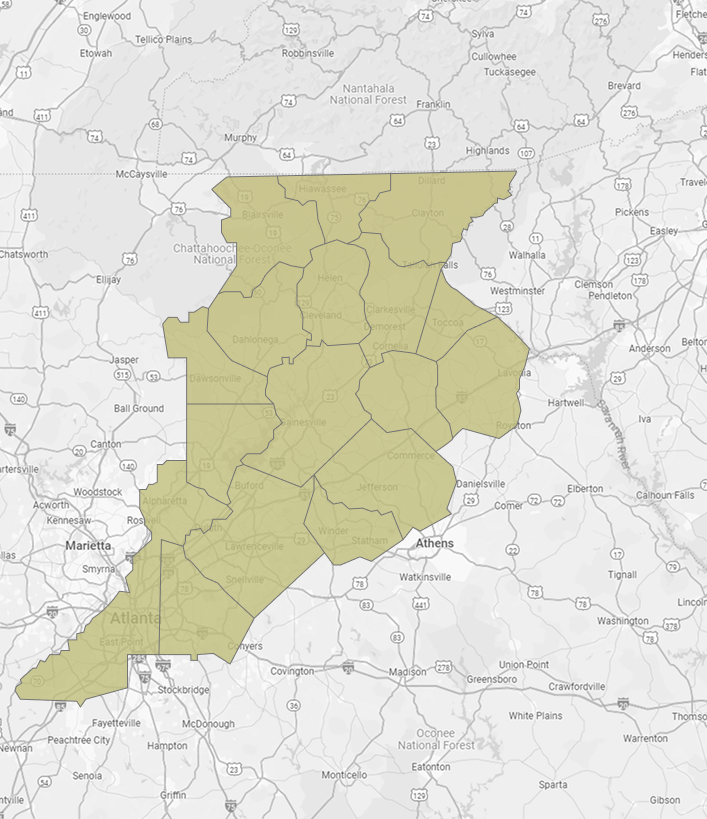














How Duluth Cases Move Through the Gwinnett County Courts
Duluth sits inside Gwinnett County, now home to more than one million residents, and its criminal cases feed one of the highest-volume court systems in Georgia. Where your case ends up depends on the seriousness of the charge, and each level of court brings its own prosecutors and procedures.
Duluth Municipal Court, on Main Street, handles city ordinance violations, traffic citations, and minor municipal matters. More serious misdemeanors, along with many DUI and traffic offenses, are prosecuted through Gwinnett County State Court and the county Recorder's Court, while felonies go to Gwinnett County Superior Court.
All of these operate out of the Gwinnett Justice and Administration Center at 75 Langley Drive in Lawrenceville, where the District Attorney handles felonies, and the Solicitor General handles State Court misdemeanors. A Duluth criminal defense lawyer who knows how cases flow from Main Street to Langley Drive can plan around the specific judge and prosecutor assigned to your file.
What a Criminal Charge Puts at Risk in Duluth

Duluth blends corporate headquarters, medical campuses, and one of the most internationally diverse communities in the state, so the fallout from a charge takes many forms. The consequences frequently outlast the case itself.
Employment and Background Checks
Healthcare workers, corporate staff, and technology professionals face background screens that can end in a lost job or a rescinded offer. Many major employers along Satellite Boulevard and Sugarloaf Parkway apply strict criminal-history policies regardless of the details.
Professional Licensing
Nurses, teachers, real estate agents, and licensed tradespeople must report arrests and convictions to their state boards. A single case can prompt a formal inquiry that puts a license at risk.
Immigration Exposure
Duluth's large immigrant and international community means many residents face added stakes. Non-citizens accused of drug crimes, theft, domestic violence, or fraud can face visa revocation, denial of naturalization, or removal, and some state charges classified as crimes involving moral turpitude carry heavy federal weight. We factor those consequences into the defense from the outset.
Housing and Family Life
Property managers screen applicants along Buford Highway and beyond, and a criminal record can also surface in custody and family court decisions. The reach of a conviction extends well past any fine or sentence.
DUI Defense in Duluth

Duluth's busy commercial corridors and event venues keep DUI enforcement active most nights of the week. A DUI defense attorney in Duluth who understands the local stop patterns can test whether each step was done by the book.
Gas South District and Major Corridors
Events at the Gas South Arena and Convention Center pour traffic onto Satellite Boulevard and Sugarloaf Parkway, where evening patrols run heavy. Buford Highway, Peachtree Industrial Boulevard, and the nightlife around the Duluth Town Green draw frequent weekend enforcement. We investigate whether officers followed protocol during your arrest and use that information to build your defense.
Implied Consent and the 30-Day Deadline
Under O.C.G.A. § 40-5-67.1, officers must read Georgia's implied consent notice before a state chemical test. A refusal triggers an automatic license suspension unless you request an Administrative License Suspension hearing or apply for an ignition interlock limited permit with the Georgia Department of Driver Services within 30 days.
A breath-test refusal cannot be used as proof of guilt at trial after the 2019 Elliott ruling, but blood and urine refusals still can, and a botched notice can support suppression.
A Closer Look at the Stop
Field sobriety tests are voluntary in Georgia, and declining them carries no automatic penalty. We examine whether the officer had reasonable suspicion to make the stop, whether the tests followed standardized methods, and whether the breath device was calibrated and maintained.
First-Offender and Conditional Discharge Options in Georgia
.webp)
For eligible Duluth defendants, Georgia offers routes to resolve a case without a lasting conviction. Each option guards your record, and each carries terms worth reviewing carefully before you accept.
The First Offender Act, O.C.G.A. § 42-8-60, lets a qualifying defendant serve probation with no conviction entered, a one-time benefit that should not be spent without weighing the state's evidence first.
First-time drug possession may qualify for conditional discharge under O.C.G.A. § 16-13-2, which dismisses the charge on successful completion. Gwinnett County also runs treatment court programs that serve as sentencing alternatives for some DUI cases and a diversion option for certain felony drug charges, and we advise on whether entering one serves your long-term interests.
Your Constitutional Rights After a Duluth Arrest
Your rights begin the instant an officer detains you, and asserting them can change the entire course of a case. Here is where those protections matter most.
Search and Seizure
The Fourth Amendment restricts how police may search your car, your home, or your person. Illegal detentions and searches without valid consent can be challenged, and suppressing that evidence often weakens or ends the prosecution.
The Right to Remain Silent
Statements you think are helpful can be turned against you. Politely decline questioning and ask for a criminal defense lawyer in Duluth before you say anything about the case.
The Right to Counsel
You are entitled to an attorney from the moment of arrest. Invoking that right stops interrogation and lets your defense begin before damaging admissions are made.
One Arrest Should Not Undo Years of Work
Let a former prosecutor and a former judge review your Gwinnett County case and build a defense aimed at the outcome that protects your future.





.avif)