




Drug Cases We Handle in Macon County
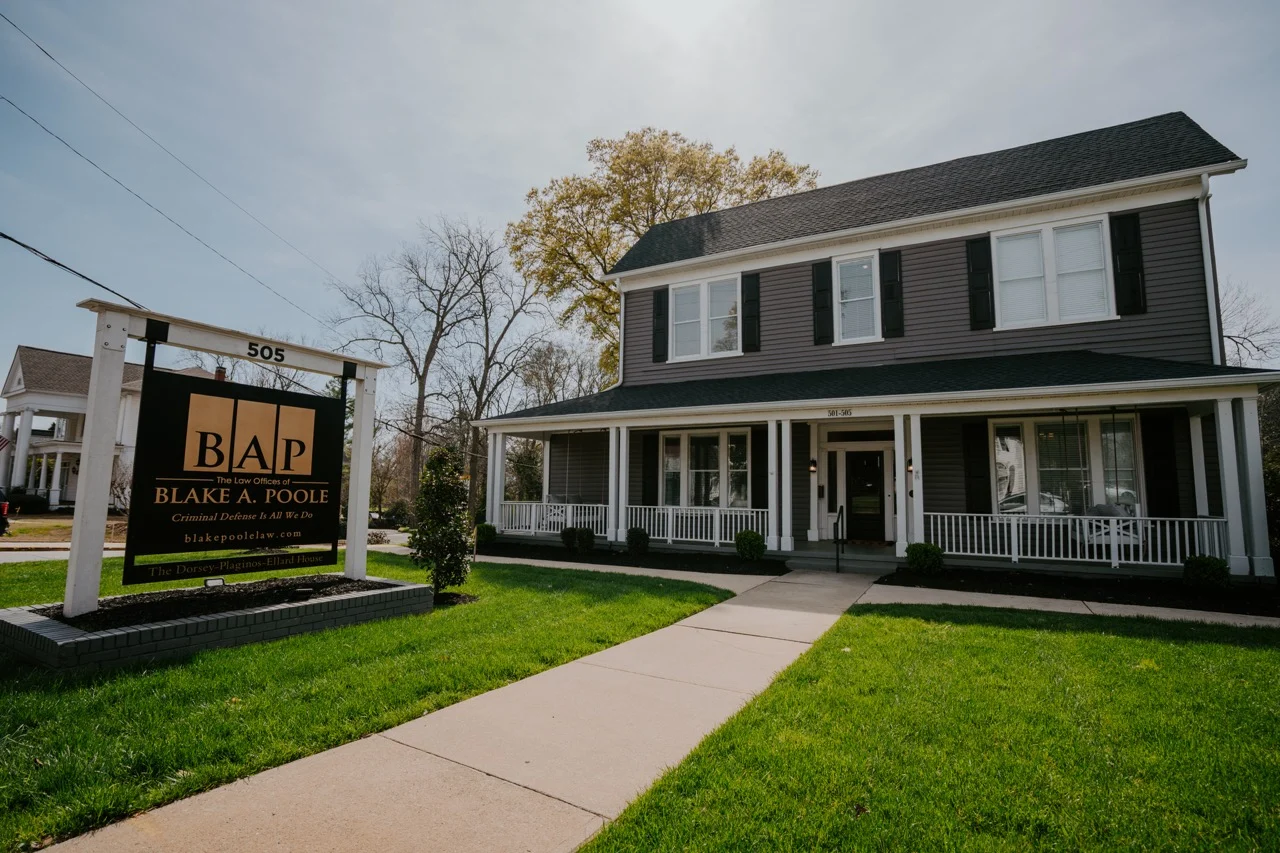
At The Law Offices of Blake A. Poole, we defend clients against all kinds of drug charges across Western North Carolina. With a 100% focus on criminal defense and a working knowledge of how these cases move through the Macon County courts, we understand what is at stake and fight aggressively to protect your future.
#spoilers_start
Simple Possession
From a small amount of marijuana to a felony controlled substance, a possession charge can upend your life. Under N.C.G.S. § 90-95, the level depends on the drug and the amount. Possessing any amount of cocaine or methamphetamine is a Class I felony, and since December 2025, possessing any amount of fentanyl is a Class H felony. Many other substances start as misdemeanors. Paraphernalia can bring a separate charge under § 90-113.22. Even a first offense can mean jail time, a permanent record, and lasting collateral damage, so we challenge the stop, question the search, and pursue dismissals or diversion whenever possible.
Possession with Intent to Sell or Deliver
When the state claims you meant to sell rather than use, the exposure jumps sharply. Prosecutors point to quantity, packaging, digital scales, or cash as “evidence” of intent, and possession with intent to sell or deliver a Schedule I or II drug becomes a Class H felony. Possession with intent to sell or deliver a Schedule I or II drug is a Class H felony, an actual sale is a Class G felony, and any intent-to-sell charge involving fentanyl is a Class F felony. For defendants 21 and older, the same conduct within 1,000 feet of a school, child care center, or public park jumps to a Class E felony.
Drug Trafficking
North Carolina's trafficking law is a weight-based trap that catches users, not just dealers. Under N.C.G.S. § 90-95(h), simply possessing a threshold amount triggers a mandatory prison sentence, and the state counts the entire mixture, including fillers and packaging. We fight these cases at every level, from the lawfulness of the stop to how the substance was weighed and tested to the constitutional violations that so often underlie a trafficking arrest.
Manufacturing and Cultivation
Growing marijuana or possessing equipment that could produce a controlled substance can bring a manufacturing charge, and manufacturing methamphetamine is punished as a Class C felony. These cases usually hinge on a search warrant, and officers frequently overreach. We scrutinize how officers obtained the warrant and collected the evidence, looking for defects that lead to suppression.
Prescription Drug Crimes
Obtaining medication by fraud, forging a prescription, or doctor shopping is a misdemeanor in North Carolina unless the State proves you acted intentionally, which makes it a Class I felony. Nurses, pharmacy staff, and other health care workers accused of diverting medication face a Class G felony, or Class E if the drug was diluted or swapped out, along with almost certain board action. We defend the criminal case with the license in mind.
Drug Conspiracy and Maintaining a Place
Prosecutors use conspiracy under N.C.G.S. § 90-98 to cast a wide net, charging people for allegedly agreeing to a drug crime, and they add “maintaining a dwelling or vehicle” under § 90-108 to reach anyone connected to a location. These charges invite guilt by association. We examine what was actually said and done and push back against the state stacking counts to gain leverage.
#spoilers_end
North Carolina Drug Laws & Penalties
North Carolina sorts controlled substances into six schedules, and the penalty for a drug offense depends on the schedule, the amount, and what the state says you intended to do with it. Understanding where a charge falls is the first step in fighting it.
Drug Schedules and Possession Penalties
The six schedules run from the most dangerous, with no accepted medical use, to prescription and low-risk substances. Possession penalties track that ranking:
A prior drug conviction changes these numbers. A Class 1 misdemeanor possession becomes a Class I felony if you have any earlier drug conviction, and a Class 2 misdemeanor becomes a Class 1.
North Carolina's Trafficking Thresholds
What surprises most people is how little it takes to face trafficking, and how the weight of the entire mixture counts. Under § 90-95(h), these amounts trigger mandatory minimum prison sentences:
#details_start
- Marijuana: More than 10 pounds starts trafficking as a Class H felony, with a 25-month mandatory minimum and a $5,000 fine.
- Cocaine: Just 28 grams, about one ounce, is a Class G felony carrying a 35-month minimum and a $50,000 fine.
- Heroin and other opioids: Only 4 grams triggers a Class F felony and a 70-month minimum.
- Methamphetamine: 28 grams brings a Class F felony and a 70-month minimum.
- Fentanyl or carfentanil: As of the December 2025 changes, 4 grams is its own offense, a Class E felony with a 90-month minimum and a $500,000 fine.
#details_end
Because the law counts fillers and packaging, a handful of pills can cross a threshold. A judge can go below the mandatory minimum in two situations: when the defendant provides substantial assistance to law enforcement, which carries its own risks, or when a first-time defendant charged only with possession at the lowest trafficking level meets a long list of requirements, including completing substance use treatment. A Franklin drug trafficking defense attorney can challenge the weight, the testing, and the stop itself, and evaluate whether either exception fits.
#cta_start
Every Hour Counts After a Drug Arrest. Don't Wait to Call Us.
Evidence disappears, memories fade, and the state starts building its case immediately. Call now to protect your rights and preserve what matters.
#cta_end
The Reality of Drug Arrests in Macon County
Most drug cases in Franklin begin with a traffic stop, not a raid. Franklin sits on US 441, which runs from the Georgia line near Dillard north toward Tennessee, a corridor the North Carolina State Highway Patrol, the Macon County Sheriff's Office, and the SBI watch closely for drug movement. A minor violation like speeding or a broken taillight can open the door to a drug investigation.
Officers commonly claim to smell marijuana, cite “furtive movements”, or point to nervousness to justify extending a stop. They ask for consent to search as if it were required, but it isn't. Refusing consent alone isn't a reason to keep you there. Under Rodriguez v. United States, once the stop's purpose ends, officers need separate reasonable suspicion to hold you for a drug dog sniff. Whether they had it is often the whole case.
After an arrest, you are taken to the Macon County Detention Center, where calls are recorded and can be used against you. Your first appearance and bond usually follow quickly, and trafficking charges often mean a high bond. Having a criminal defense lawyer involved at this stage, before the case reaches the District 43 prosecutors, can change its entire course.
Constitutional Defenses That Win Drug Cases
In a Macon County drug case, the fight is rarely about whether a substance existed. It is about how the officer got to it. Because so many local arrests begin with a stop on US 441 or US 64, the constitutional questions around that stop often decide the outcome.
Illegal Searches and Seizures
A stop on a mountain highway still has to follow the rules. Officers need reasonable suspicion to pull you over and cannot stretch a routine traffic stop into a drug hunt without more, and searching your vehicle, your bags, or your home requires probable cause, valid consent, or a warrant. A hunch or a nervous answer isn't enough, and since hemp became legal, whether the smell of "marijuana" alone still justifies a search is an open question in North Carolina courts, one we're prepared to litigate. When the stop or search crossed a constitutional line, we move to suppress what it produced, and in a possession or trafficking case, suppression can leave the state with nothing left to try.
Challenging the State's Evidence
Even when a search holds up, the state's proof often does not. In trafficking cases, everything rides on the alleged weight, so we test how the substance was weighed, whether packaging and fillers were counted, and whether the lab followed its own protocols. A positive roadside field test is not a lab result. And when drugs turn up in a shared truck or a rented cabin rather than on you, the state must actually prove you knew they were there and controlled them, which is a gap we know how to open.
First-Offender and Treatment Options in North Carolina
North Carolina offers real alternatives to a conviction for eligible defendants, but each has strict limits and one-time rules. We evaluate every client for these paths and fight for them when they fit.
Conditional Discharge Under § 90-96
If you have no prior felony or drug conviction and are charged with drug or paraphernalia possession, N.C.G.S. § 90-96 generally requires the court to offer conditional discharge. You're placed on probation without a conviction, and when you complete it, the charge is dismissed, and you may be eligible for expunction under § 15A-145.2. The court can deny it only with a written finding and the DA's agreement. It isn't available for intent-to-sell, sale, or trafficking charges, and you can only use it once, so review the terms carefully before accepting.
Drug Treatment Court and Recovery Court
For charges rooted in addiction, the district's judicially managed recovery and drug treatment court provides intensive supervision and treatment rather than incarceration. It is demanding, but completing it often leads to reduced charges or dismissal, along with support that addresses the underlying problem.
Expunction of a Dismissed Charge
A dismissal isn't always the end, because charges can still show up on background checks. Under § 15A-146, most cases dismissed or ending in a not-guilty verdict after December 2021 qualify for automatic expunction, though a felony dismissed as part of a plea deal does not. We check whether yours has actually been cleared and file a petition when it hasn't.
The Hidden Costs of a Drug Conviction
A sentence is only the part you see. In a small county like Macon, a drug conviction quietly reaches into work, school, and daily life long after the case closes:
- Professional and occupational licenses. Boards for nurses, teachers, CDL holders, and other licensed workers treat a conviction as a reportable event, and many respond by suspending or revoking licenses. In a community this size, the reputational hit can travel faster than the paperwork.
- Federal student aid. Drug convictions no longer automatically cost students federal financial aid, but a judge can still deny certain federal benefits at sentencing, and some scholarships, schools, and housing programs run their own background checks.
- Immigration status. For a non-citizen in Western North Carolina, even a low-level drug conviction can put a green card, a visa, or a path to citizenship at risk, and it can trigger removal.
- Employment and firearm rights. Convictions surface on background checks for years, and a felony ends your right to own a firearm, which carries real weight in a region built around hunting and the outdoors.
Don't Let a Drug Charge Define Your Future
Former prosecutor Blake Poole knows how the state builds drug cases and how to take them apart. Available 24/7 for drug crime emergencies.