






What Counts as a Federal Crime?
Federal and state charges run on separate tracks, with their own laws, prosecutors, and courts. A case usually turns federal when the conduct crosses state lines or involves a federal agency, federal funds, or a federal statute. These prosecutions are broader and better funded than anything at the county level.
The federal charges we defend most often in the Western District of North Carolina include:

- Drug trafficking and conspiracy (21 U.S.C. § 841, § 846): Manufacturing, distributing, or moving controlled substances, or agreeing with others to do so.
- Wire and mail fraud (18 U.S.C. § 1343, § 1341): Using electronic communications or the mail to carry out a scheme to defraud.
- Bank and financial fraud (18 U.S.C. § 1344): Using false statements to obtain money or assets from a financial institution.
- Tax evasion (26 U.S.C. § 7201): Willfully taking steps to evade a federal tax, such as filing a false return that hides income.
- Identity theft (18 U.S.C. § 1028, § 1028A): Using another person's information to open accounts, obtain credit, or claim refunds.
- Federal weapons charges (18 U.S.C. § 922(g)): For example, possessing a firearm when the law bars you from having one.
- Racketeering and money laundering (18 U.S.C. § 1962, § 1956): Organized-scheme and criminal-proceeds offenses that often attach to larger fraud or drug cases.
Whatever the accusation, a conviction can reshape the rest of your life. We are here to challenge the government's case at every stage.
Where Federal Cases from Franklin Are Prosecuted
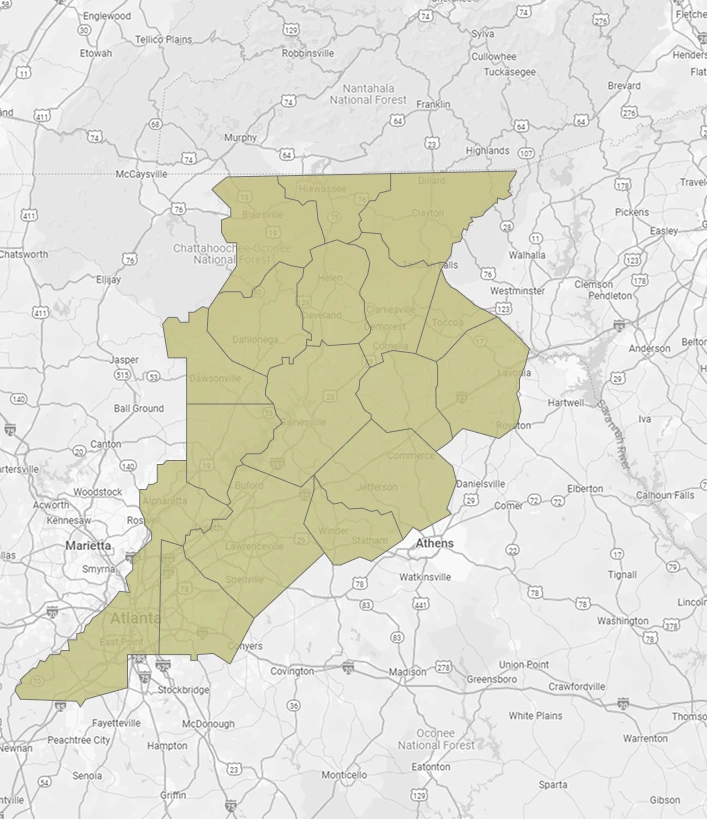
Knowing which court will hear your case matters, because the venue shapes the judges, the prosecutors, and the pace of everything that follows. Franklin sits in Macon County, which falls within the U.S. District Court for the Western District of North Carolina.
The district assigns federal cases from Macon, Cherokee, Clay, Graham, Jackson, and Swain Counties to its Asheville Division, and most proceedings take place at the federal courthouse in Asheville. The U.S. Attorney's Office handles prosecution, and the investigation behind your charge may involve one or more federal agencies working together long before you ever see a courtroom. If your case goes to trial and you are convicted, the U.S. Court of Appeals for the Fourth Circuit hears any appeal. An attorney who understands this specific corner of the federal system can anticipate how a case will move and prepare accordingly, rather than treating every prosecution the same.
Understanding the Gravity of Federal Charges
Federal cases are hard for a reason: the government files them to win. According to the U.S. Sentencing Commission, about 97% of people sentenced in fiscal year 2024 pleaded guilty, and courts imposed prison-only sentences in roughly 89% of cases. That is exactly why early, strategic defense matters so much. Here is how a federal prosecution typically unfolds.
The Investigation
Most federal cases begin quietly. Agencies such as the FBI, DEA, ATF, IRS Criminal Investigation, or Homeland Security Investigations may gather records, conduct surveillance, and interview associates for months before charges are filed. Getting counsel involved at this stage can give us a chance to influence the outcome before an indictment is ever returned.
The Grand Jury and Indictment
In felony matters, prosecutors present evidence to a federal grand jury, which decides only whether enough evidence exists to bring charges, unless you agree to waive indictment. Being indicted is not the same as being guilty. It reflects a preliminary judgment that the case should proceed, and the government still has to convince a trial jury of every element beyond a reasonable doubt.
Initial Appearance, Detention, and Arraignment
At your first appearance, the court reads the charges, and you enter a plea. The court also decides whether to detain you or release you. Skilled advocacy here can mean the difference between fighting your case from home and fighting it from custody.
Discovery and Plea Negotiation
Next comes the exchange of evidence. We examine what the government has, test how it obtained it, and look for weaknesses. Prosecutors may offer a plea, but that decision is always yours, and you should never make it without a clear-eyed read of the evidence.
Trial and Sentencing

If no fair resolution is on the table, we are prepared to take your case to trial. Sentencing is a separate stage, guided by the U.S. Sentencing Guidelines and, in some offenses, mandatory minimum terms that limit a judge's discretion. Careful work at sentencing can substantially change the outcome even after a conviction.
Appeals
If legal errors affected your trial, you may have grounds to appeal to the Fourth Circuit. We can review the record and advise you on whether an appeal is worth pursuing.
What to Do If Federal Agents Contact You in Franklin
The period between "we'd like to talk" and a formal charge is often the most important window in the entire case, and most people spend it making things worse. Federal agents are trained interviewers, and a casual conversation can become the backbone of the case against you.
If you are contacted, a few principles protect you:
- Stay calm and stay quiet. You are not required to explain yourself. Politely decline to answer questions until you have a lawyer.
- Do not consent to searches of your phone, home, car, or accounts without speaking to counsel first.
- Preserve everything. Do not delete messages, files, or emails. That can itself become a separate charge.
- Call a federal crimes attorney immediately. The sooner we understand what the government is doing, the more options we have to protect you.
Knowing which agency is involved and what it is looking for often shapes the entire defense. We can help you make sense of it before you say something you cannot take back.
Facing Federal Charges in Western NC?
Do not take on the federal government alone. Our defense team is available 24/7 to protect your rights and your future.