





Free Consultations

|

24/7 for Emergency Help

BAP hero image

White-Collar Crimes Attorney in Franklin, NC

Facing a White-Collar Investigation in Macon County? Protect Your Name.

As Seen On

White-Collar Cases We Defend in Macon County

The Law Offices of Blake A. Poole defends professionals, business owners, and everyday earners against financial-crime allegations across Franklin and Western North Carolina. With a 100% focus on criminal defense, we break down these cases at every stage, from the first target letter to trial.

  • Embezzlement and Theft by an Employee

    • When money goes missing, trusted employees, bookkeepers, and nonprofit treasurers are the first suspects. North Carolina charges this as embezzlement under N.C.G.S. § 14-90, a Class H felony that becomes a Class C felony at $100,000 or more. Prosecutors assume the worst about intent while ignoring loans, disputed pay, or bad recordkeeping. We separate a genuine accounting dispute from a crime and protect your name while we do.

  • Obtaining Property by False Pretenses and Fraud

    • N.C.G.S. § 14-100 is North Carolina’s catch-all fraud statute, a Class H felony that rises to Class C at $100,000 or more. When checks, emails, or loans cross state lines, the same conduct can become federal wire, mail, or bank fraud. With the Federal Trade Commission reporting over $12.5 billion in fraud losses in 2024, prosecutors aggressively charge these cases. We attack the state’s intent theory and every document behind it.

  • Financial Identity Fraud and Identity Theft

  • Forgery, Uttering, and Worthless Checks

    • Forgery is more than a fake signature. Creating a false instrument (§ 14-119) and passing it off as genuine (uttering, § 14-120) are Class I felonies, and writing a check you know will bounce is usually a misdemeanor under § 14-107, but repeated offenses can become a felony. These cases turn on two things: whether you knew the item was false and whether you meant to deceive. We focus on intent and the innocent explanations prosecutors skip.

  • Money Laundering

    • Money laundering is mainly federal. Under 18 U.S.C. § 1956, a conviction carries up to 20 years per count, and under § 1957, spending or depositing more than $10,000 in criminal proceeds carries up to 10 years, even without any attempt to hide the money. The government doesn’t need a separate conviction for the underlying crime, but it must prove the money came from specified unlawful activity and that you knew it. We challenge each link in that chain.

  • Tax Fraud and Tax Evasion

    • Underreporting income or inflating deductions can trigger parallel IRS and North Carolina Department of Revenue investigations, with federal tax evasion charged under 26 U.S.C. § 7201. The key word is willful, and honest mistakes or reasonable reliance on a preparer are not crimes. Early, quiet intervention often stops a civil audit from becoming a criminal referral.

  • Elder and Vulnerable-Adult Financial Exploitation

    • Western North Carolina’s large retiree population makes these cases common around Franklin and Highlands. North Carolina treats financial exploitation of an older or disabled adult (N.C.G.S. § 14-112.2) as a serious felony, and caregivers, family members, and advisors are frequent targets. Many cases start with a power of attorney or joint account and later get recast as theft. We rebuild the authority and the intent behind each transaction.

  • Healthcare and Insurance Fraud

    • A Medicare, Medicaid, or private-insurance fraud charge can end a medical career before any conviction, because it triggers program exclusion and licensing action. Prosecutors routinely recast billing disputes and coding errors as intentional fraud. We challenge the government’s sampling methods, restore the clinical context behind the codes, and fight to protect your license.

  • Bribery, Public Corruption, RICO, and Conspiracy

    • Prosecutors use conspiracy and racketeering theories, including federal RICO (18 U.S.C. § 1962), to bundle unrelated conduct into one scheme and raise the penalties. In a small county, a public-corruption or bribery allegation also carries heavy reputational damage. These theories fall apart when the alleged pattern is ordinary business and no agreement existed. We make the state prove your actual role, not guilt by association.

North Carolina White-Collar Laws & Penalties

North Carolina grades financial crimes by offense class, dollar amount, and intent, and many can also be charged federally. Where a case lands, and in which court, shapes everything that follows.

How North Carolina Grades Financial Crimes

Most white-collar offenses are felonies sentenced under the Structured Sentencing Act, N.C.G.S. § 15A-1340.17, where the punishment depends on the felony class and your prior record.

  • Embezzlement (§ 14-90) and false pretenses (§ 14-100): Class H, rising to Class C at $100,000 or more
  • Identity theft (§ 14-113.20): Class G, and up to Class F in aggravated cases
  • Forgery and uttering (§§ 14-119, 14-120): Typically Class I
  • A Class C felony means presumptive active prison time; Class G, H, and I felonies range from probation to active time, depending on prior record

Federal White-Collar Charges and the Western District of North Carolina

A man in a dark suit at an office desk slides a stack of cash into a white envelope

Some Macon County cases move to federal court, where the rules and sentences are tougher. When a scheme crosses state lines, involves a federally insured bank, or touches a federal program, prosecutors from the U.S. Attorney’s Office can bring charges in the U.S. District Court for the Western District of North Carolina, Bryson City Division, with the court also sitting in Asheville.

Common federal charges include:

Federal cases carry rigid sentencing guidelines and high conviction rates, so we get involved during the investigation, where we can make the biggest difference.

Consequences Beyond a Sentence

The damage from a conviction reaches well past any prison term or fine:

  • Restitution: Repay every dollar of loss plus interest, and bankruptcy cannot erase it.
  • Asset forfeiture: Authorities can freeze or seize accounts, homes, vehicles, and businesses, sometimes before conviction.
  • Licensing: Nurses, CPAs, real estate agents, and financial advisors can lose a license on a charge alone.
  • A felony also costs you your firearm rights and your right to vote in elections until they are restored.

The Best Time to Fight a White-Collar Case Is Before the Indictment

White-collar cases are built long before an arrest, and the early weeks often decide the outcome. Call now to put an experienced defense team between you and the government.

How White-Collar Investigations Unfold in Macon County

Unlike a roadside stop, a white-collar case usually begins in silence, often months before an arrest. The first sign of trouble in Franklin is rarely handcuffs. Watch for these early warning signs:

  • A target letter from a prosecutor;
  • A grand jury subpoena for your records;
  • A call or visit from the SBI, the NC Department of Revenue, IRS Criminal Investigation, or the FBI;
  • Agents quietly pulling your bank statements, tax filings, and emails.

State cases are heard in the Macon County courts at 5 West Main Street in Franklin, with felonies tried in Superior Court, while federal cases go to the U.S. District Court for the Western District of North Carolina. Investigators also lean on former employees and business partners hoping for leniency.

What you do now decides the case. Producing the wrong records, sitting for an interview with investigators without your own attorney present, or routinely deleting files can hand the government its best evidence or add an obstruction charge. Getting counsel involved before the case reaches the District 43 prosecutors can change its entire course.

Constitutional and Evidentiary Defenses in White-Collar Cases

White-collar prosecutions rest on mountains of documents and on witnesses under pressure, and that complexity is where a strong defense lives. We build every case around the weaknesses the government hopes you will not find.

  • Attacking Criminal Intent

    • Nearly every financial crime requires proof of specific intent to defraud or deceive, and that is where these cases are most vulnerable. A failed business, a bookkeeping error, or a genuine dispute is not a crime. We draw a clear line between poor judgment and criminal conduct and build the record that shows it.

  • Good Faith and Reliance on Professional Advice

    • If you honestly believed your conduct was lawful, the state cannot easily prove the willfulness a fraud charge demands. Reliance on an accountant, attorney, or compliance professional can be a powerful shield. We assemble the paper trail showing you sought guidance and followed it.

  • Challenging the Paper Trail and Forensic Accounting

    • Prosecutors use forensic accountants to comb years of records for patterns they can call fraud, and they pull emails out of context. We counter with our own experts, restore the real meaning of the documents, and expose the incentives and inconsistencies that can shatter a cooperating witness’s credibility.

  • Search, Seizure, and Statute-of-Limitations Challenges

    • A long investigation increases the chance that agents overstepped in a search or interview, and we press those Fourth, Fifth, and Sixth Amendment violations hard. Timing matters too. North Carolina sets no statute of limitations for felonies, while most federal white-collar offenses must be charged within five years, with most criminal tax offenses within six, and certain bank-related frauds within ten.

Resolving a White-Collar Case Without a Conviction

A lawyer in a suit gestures across a wooden table toward a client with clasped hands

Success in these cases often comes from preventing charges or resolving them quietly, not just from winning at trial. We pursue every path that protects your record and your livelihood.

Pre-Indictment Intervention

The pre-charging window is the most valuable stage in a white-collar case. By engaging prosecutors early with exculpatory evidence and legal challenges, we can sometimes persuade them to narrow the charges or decline to bring them at all, sparing you the publicity of an indictment.

Deferred Prosecution and Conditional Discharge

For eligible defendants with no disqualifying history, N.C.G.S. § 15A-1341 authorizes deferred prosecution and conditional discharge for many misdemeanors and lower-level felonies, allowing charges to be dismissed after conditions are met. We present the treatment plan, restitution, or community ties that make a deferral realistic and worth granting.

Restitution-Based and Civil Resolutions

Some financial matters can be resolved by making the alleged victim whole, satisfying the government’s interest without a criminal conviction. Repayment agreements, regulatory settlements, and civil resolutions can take a case off the criminal track entirely when handled early.

Expunction Under the Second Chance Act

A dismissal isn't always the end, because charges can still appear on background checks. Under North Carolina’s Second Chance Act and N.C.G.S. § 15A-146, many dismissed or not-guilty white-collar cases can be expunged, some by operation of law. We evaluate your record and handle the petition so an old accusation stops following you.

The Hidden Costs of a White-Collar Conviction

A courtroom sentence is only part of the story. In a small county like Macon, a conviction quietly reshapes work and daily life long after the case closes:

  • Professional standing. Licensing boards treat a conviction as a reporting event, and in a community this size the reputational hit travels fast.
  • Employment. Most professional contracts allow termination on indictment, and severance, bonuses, and deferred pay can vanish.
  • Firearms and civil rights. A felony ends your right to possess a firearm and suspends your right to vote until restored.
  • Immigration status. For non-citizens, a fraud conviction can be treated as a crime involving moral turpitude and put a green card or visa at risk.

The Government Builds These Cases Quietly. Get Ahead of It.

Former prosecutor Blake Poole knows how financial-crime cases are built, and where they fall apart. Available 24/7 for white-collar investigations and emergencies.

Why Choose The Law Offices of Blake A. Poole for White-Collar Defense

When your name and your freedom are on the line, experience and perspective matter. Here is what our team brings to a white-collar case in Franklin and Macon County.

  • defence icon

    Former Prosecutor Insight

    Blake Poole’s years as a prosecutor give us an inside view of how the government builds financial-crime cases, which evidence it leans on, and where it hopes the defense will not look. That knowledge translates directly into stronger, earlier defenses.

  • defence icon

    Former Judge Perspective

    Matthew Leipold’s experience on the bench shows us how judges weigh complex financial evidence and what actually moves them at hearings and sentencing. Having a former judge on your side changes how a courtroom receives your case.

  • defence icon

    Focused, Trial-Ready Defense in Western North Carolina

    Criminal defense is all we do, and we prepare every case as though it will be tried. That readiness gives our negotiations weight with District 43 prosecutors and keeps us ready to fight when a fair resolution isn't on the table.

Our Strategic Defense Process

Defence Process
  • Immediate Action
    • We get to work right away, putting a litigation hold on records so nothing is lost, taking over communications with investigators, and filing early motions that shape the case. Stepping in quickly can sometimes keep charges from being filed at all.

  • Comprehensive Investigation
    • We do not take the government’s theory at face value. We review the financial records ourselves, retain forensic accountants, and identify witnesses and documents prosecutors overlooked.

  • Aggressive Litigation
    • We litigate. Through suppression motions and pretrial challenges, we make the government justify its searches, its subpoenas, and its accounting, and a win at that stage can end a case before a jury is ever seated.

  • Strategic Resolution
    • When it serves you, we negotiate from strength, using our trial readiness to push for a dismissal, a reduction, or a diversion. When it doesn't, we are prepared to try the case in Macon County Superior Court or the Western District of North Carolina.

Client Reviews

Our Attorneys

Watch a Video About Us

Blake A.Pool

Blake A. Poole

Founding Attorney

Leveraging extensive experience as both a prosecutor and defense attorney, Blake provides unique insights and tenacious representation in criminal defense cases. He is deeply involved in the community and dedicated to his clients.

  • Former Prosecutor & Military Experience

  • Aggressive Defense with Proven Results

  • Personal Attention & Constant Communication

Our Team
×

Recognition & Awards

Areas We Serve

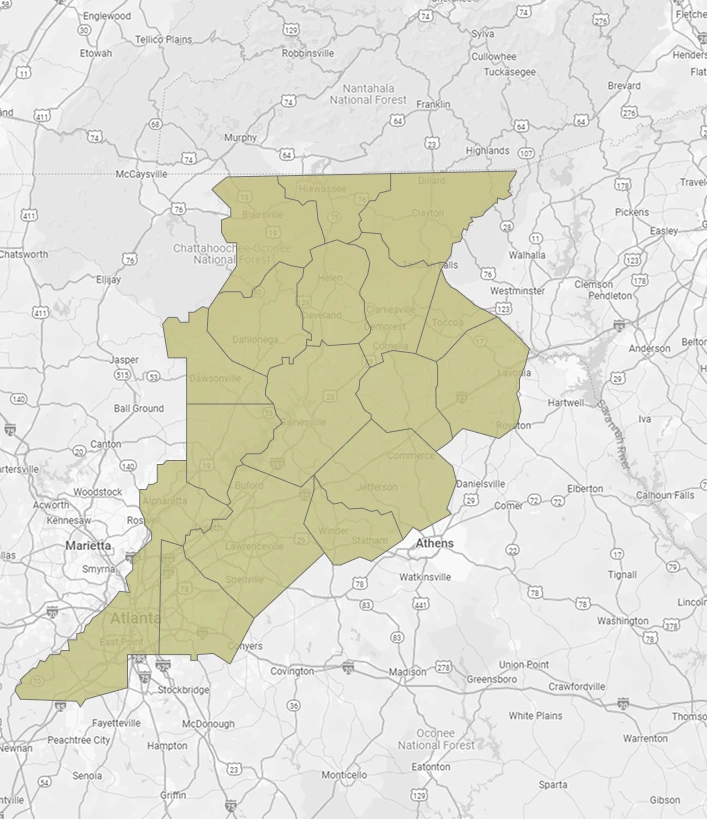
Our white-collar defense team proudly serves clients across Franklin and Macon County, including:

FAQs About White-Collar Charges in Franklin, NC

  • What is considered a white-collar crime in North Carolina?
    • White-collar crimes are non-violent, financially motivated offenses built on deception or breach of trust. In North Carolina, they include embezzlement, obtaining property by false pretenses, identity theft, forgery, tax fraud, and elder financial exploitation. Prosecutors can also charge many of these offenses federally as wire, mail, or bank fraud.

  • Is embezzlement a felony in North Carolina?
    • Yes. Under N.C.G.S. § 14-90, embezzlement is a Class H felony, and it becomes a Class C felony when the amount is $100,000 or more. Penalties depend on the felony class and your prior record, and a conviction usually carries a restitution order.

  • Will a white-collar charge in Macon County be handled in state or federal court?
    • Either, and sometimes both. State felonies are prosecuted in Macon County Superior Court in Franklin, while federal matters fall within the Western District of North Carolina, Bryson City Division. The forum affects the rules, the penalties, and your options.

  • Do white-collar charges have a statute of limitations in North Carolina?
    • North Carolina has no statute of limitations for felonies, so prosecutors can bring a state fraud or embezzlement charge years later. Federal white-collar offenses generally must be charged within five years, and most criminal tax offenses within six, though certain bank-related frauds carry a ten-year limit.

  • Should I talk to investigators or federal agents without a lawyer?
    • No. Agents are trained to draw out statements that can later be framed as inconsistencies or even obstruction. Politely decline, invoke your right to counsel, and let us handle every communication with the government.

  • Can a white-collar charge be dismissed or reduced?
    • Yes. We can dismiss or reduce charges through pre-indictment intervention, suppression of improperly obtained evidence, weaknesses in the state’s proof of intent, restitution-based resolutions, or a diversion program. Early involvement gives you the best chance.

  • Will I go to prison for a first white-collar offense?
    • Not necessarily. First-time defendants with strong mitigation often avoid prison time, especially for lower-level felonies. Federal sentencing guidelines now include a reduction for first-time offenders with no criminal history points (the “zero-point offender” adjustment). Probation, restitution, and alternative sentences remain realistic outcomes.

  • Can a white-collar conviction be expunged in North Carolina?
    • Some can. You can often expunge dismissed and not-guilty charges, some automatically under the Second Chance Act and N.C.G.S. § 15A-146. Some nonviolent felony convictions may also qualify after a waiting period under § 15A-145.5. Federal convictions generally cannot be expunged, which is why early defense matters.

Get a Former Prosecutor and a Former Judge in Your Corner

A white-collar investigation in Franklin or anywhere in Macon County demands immediate action, because every day the government works is a day it builds its case. Call now to start building your defense. Available 24/7 for white-collar investigations and emergencies.

    Are you a new client?*
      Case Location*
        Type of Case*

          Thank you!
          Your message has been submitted
          Oops! Something went wrong while submitting the form.